
Complete Guide to the Rotomolding Process
Rotational molding—also called rotomolding or rotocasting—is a low-pressure manufacturing method that creates seamless, hollow plastic parts through controlled heat and multi-axis rotation. Unlike high-pressure processes like injection molding, rotational molding melts powdered resin inside a rotating mold, distributing material evenly to form durable, one-piece components with consistent wall thickness.
This century-old process remains essential across industries from agriculture to foodservice because it delivers structural integrity, design flexibility, and cost-effective production—especially for larger parts where other methods become prohibitively expensive.
How Does Rotational Molding Work?
1. Mold Loading
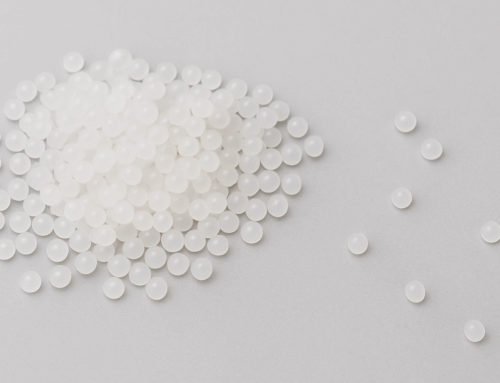
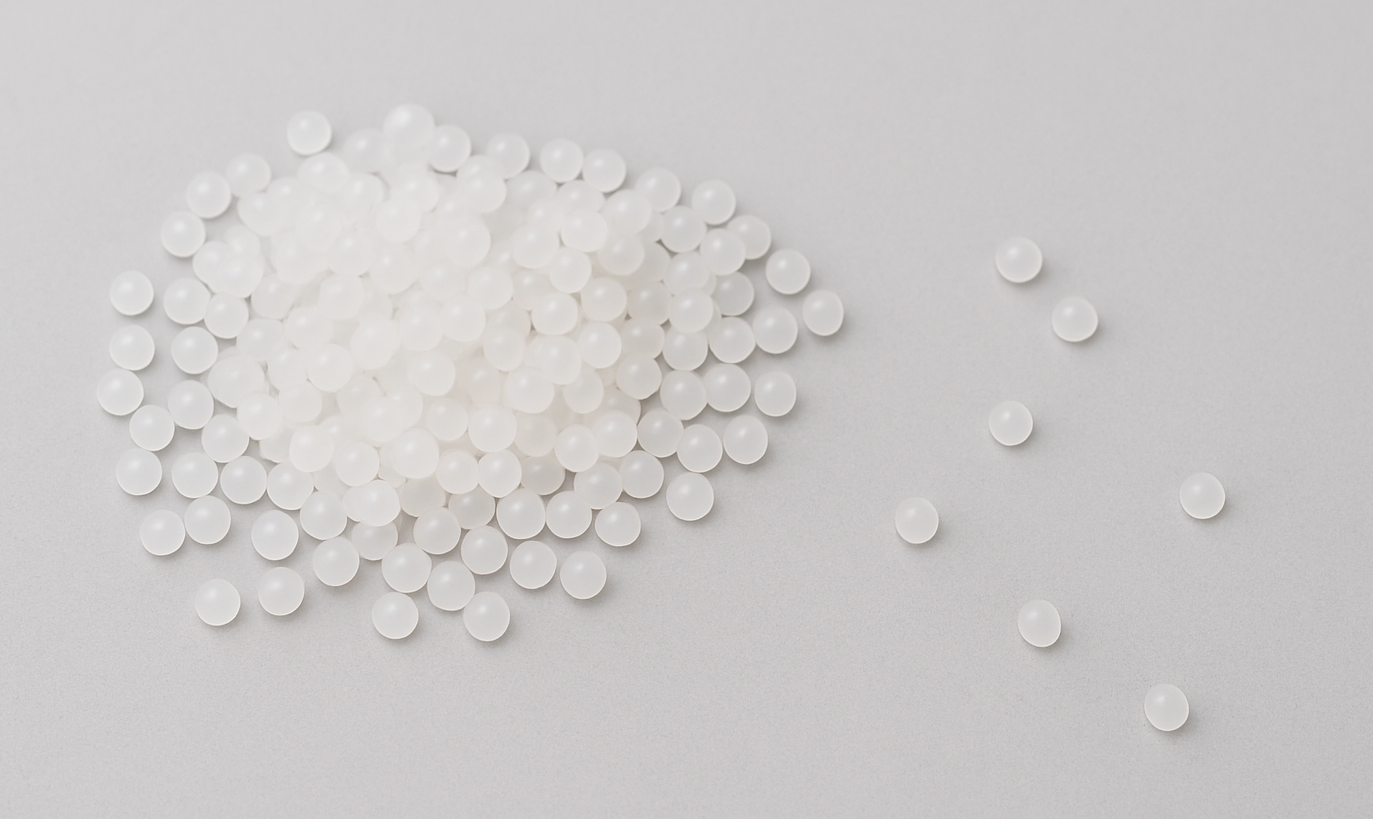
Powdered resin—typically polyethylene—is measured and loaded into a hollow mold. Precise material quantity determines the final wall thickness.
2. Heating and Rotation
The mold enters an oven and rotates simultaneously on two axes at slow speeds (typically 4-12 RPM). As heat penetrates the mold, plastic powder melts and adheres evenly to interior surfaces. This low-pressure, gentle rotation eliminates internal stresses common in high-pressure molding.
3. Cooling
The mold transfers to a cooling chamber where air, water mist, or both solidify the plastic against the mold wall, without stress cracks.
4. Part Removal
Once cooled, the mold opens and the finished part releases as a complete, seamless construction—no welds or assembly required.
While cycle times range from 30 minutes to several hours, depending on part size and wall thickness, the process excels at producing complex geometries and large hollow components that would be impractical with other methods.

Rotational Molding Materials
Material selection directly impacts performance, durability, and cost. Rotomolding materials must withstand extended heating cycles and flow uniformly without shear forces, limiting options to specific thermoplastics.
Polyethylene: The Industry Standard
Polyethylene (PE) dominates rotational molding due to its thermal stability, impact resistance, and affordability:
- PE Rotational Molding: Standard-grade PE balances toughness with cost-effectiveness for general applications
- LLDPE Rotational Molding: Linear low-density polyethylene offers superior flexibility and environmental stress crack resistance—ideal for outdoor products and impact-prone parts
- HDPE Rotational Molding: High-density PE provides enhanced stiffness, chemical resistance, and temperature tolerance for industrial tanks and utility components
Specialty Materials for Demanding Applications
When standard PE cannot meet specific requirements, manufacturers turn to engineered resins:
- Polypropylene Rotational Molding: PP delivers excellent chemical resistance, fatigue strength, and heat tolerance for automotive housings and chemical processing equipment
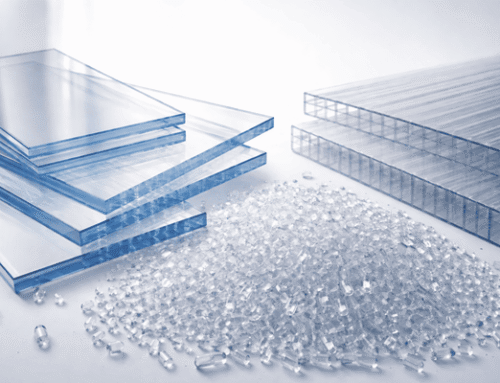
- Polycarbonate Rotational Molding: PC provides transparency, extreme impact strength, and high-temperature performance—though higher costs limit use to protective covers and visibility-critical applications
- PMMA Rotational Molding: Acrylic offers optical clarity and hard, glossy surfaces where aesthetics matter
- Roto Molding PVC Compounds: Flexible or rigid PVC serves niche applications requiring flame resistance or specific chemical profiles
Need help selecting the right material for your application?
Need help selecting the right material for your application?
Integrity Rotational Molding’s team helps OEMs choose the right resins to meet performance, environmental, and cost needs.
Integrity Rotational Molding’s team helps OEMs choose the right resins to meet performance, environmental, and cost needs.
Technical Specifications: Speed Ratio and Tolerances
Rotational Molding Speed Ratio
The speed ratio refers to the relationship between primary (major axis) and secondary (minor axis) rotation speeds. Manufacturers adjust this ratio to ensure even resin distribution and prevent material pooling in corners or recessed features. Proper speed ratio control maintains uniform wall thickness throughout complex geometries.
Rotational Molding Tolerances
Unlike injection molding’s tight precision, rotomolding tolerances reflect the process’s lower-pressure nature. Dimensional accuracy depends on:
- Mold material and rigidity
- Wall thickness consistency
- Cooling uniformity
- Resin thermal characteristics
Incorporating draft angles, avoiding sharp corners with radii, and uniform wall sections improves dimensional repeatability and reduces secondary operations.
Applications: Rotational Molded Tanks and Beyond
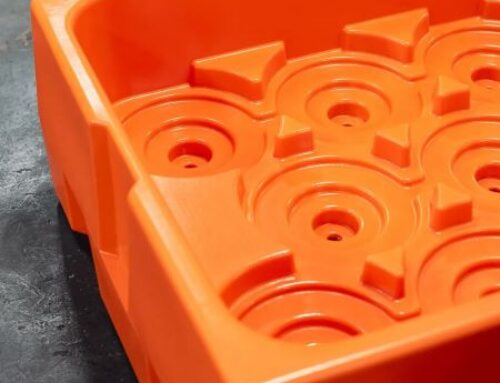
Rotational molded tanks represent one of the most common applications—seamless PE construction creates leak-resistant vessels for water, chemicals, fertilizer, fuel, and agricultural storage without weak points or seams.
Additional applications span multiple industries:
- Playground equipment and recreational products
- Kayaks and watercraft
- Waste containers and material handling bins
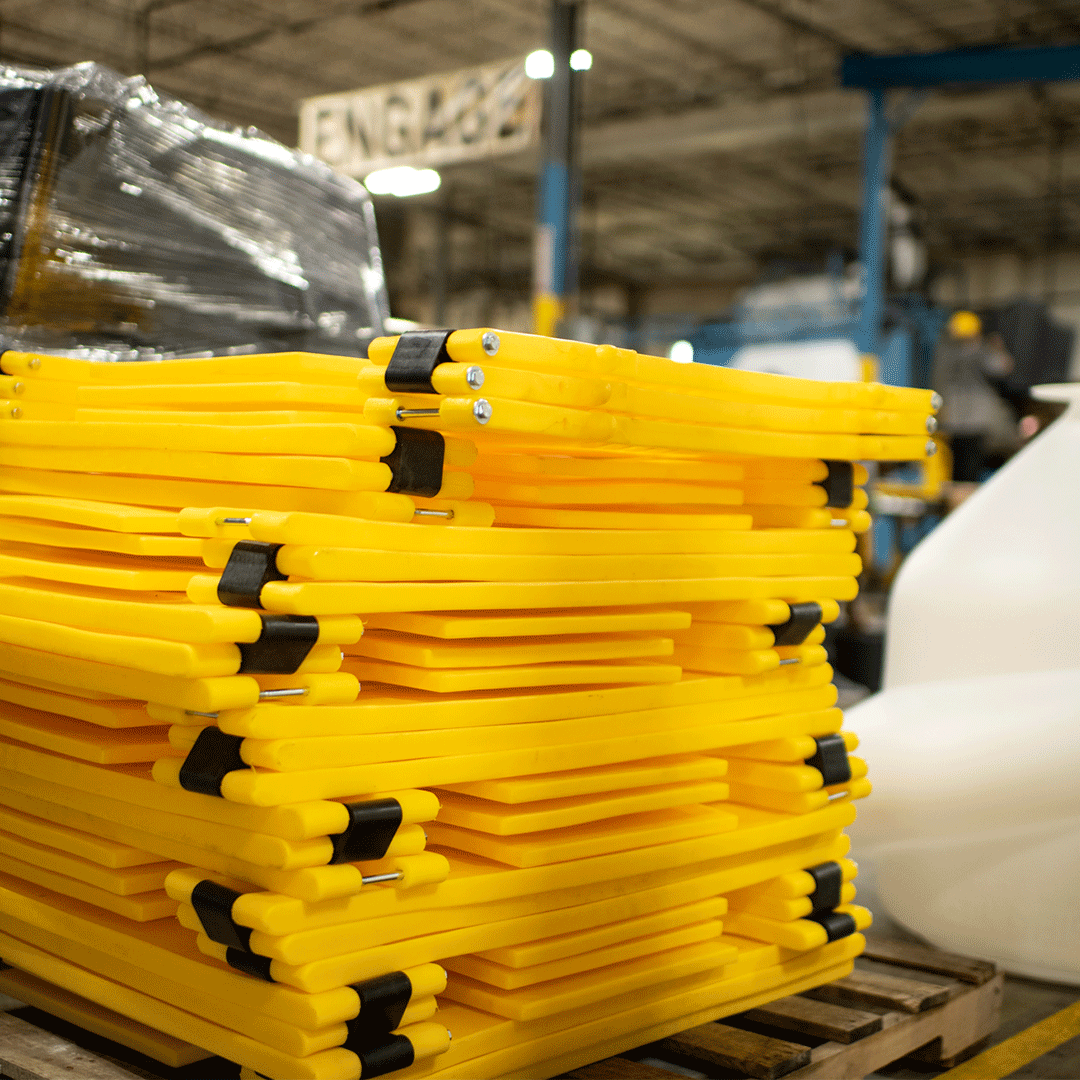
- Traffic barriers and safety equipment
- Coolers, insulated cases, and outdoor storage
- Industrial housings and equipment enclosures
- Secondary storage for IBC spill containment
- Construction barriers, cones, and traffic drums
- Logistics plastic pallets and dunnage racks
The ability to produce large, complex hollow shapes as single-piece constructions gives rotomolding a distinct advantage in markets where durability and leak resistance are non-negotiable.
Advantages of Rotational Molding
Rotomolding advantages include:
- Uniform wall thickness through controlled rotation
- Low tooling costs—aluminum molds work effectively due to low-pressure operation
- Seamless construction with no weld lines or failure points
- Double-wall capability without complex post-processing
- Minimal defects from stress-free heating
- Superior impact resistance and structural durability
- Cost-effective for medium-to-large parts where other processes become expensive
Blow Molding vs. Rotational Molding
While both create hollow plastic parts, key differences determine which process fits your application:
| Feature | Rotational Molding | Blow Molding |
|---|---|---|
| Tooling Cost | Low | High |
| Wall Thickness | Very Uniform | Variable |
| Part Size Range | Small to very large | Primarily small to medium |
| Material Stress | Minimal | Higher |
| Best Applications | Tanks, large housings, structural parts | Bottles, containers, thin-wall packaging |
Rotational Molding Troubleshooting
Common production challenges and solutions:
- Wall thickness variation: Adjust speed ratio, resin load, or heating time
- Bubbles or voids: Increase heating duration or verify resin moisture content
- Warping: Improve cooling uniformity or optimize mold venting
- Inconsistent surface finish: Check mold temperature, surface condition, or release agents
- Corner bridging: Modify radii or extend heating cycles for improved flow
Why Partner With Integrity Rotational Molding
Since 2001, Integrity Rotational Molding has engineered custom rotomolded solutions for customers across the USA, Canada, Germany, and Ireland. As an ISO 9001-certified, family-owned American manufacturer, Integrity operates with complete supply chain control and produces over 184 unique part designs for agricultural, automotive, industrial, and commercial applications—including their newly launched Integrity Commercial Products line for janitorial and foodservice markets.
With advanced equipment including Ferry RS-220E multi-cavity machines and facilities expanding by 22,000 square feet (with 250,000 square feet planned), Integrity specializes in solving challenges other rotomolders can’t—tight tolerances, complex geometries, and demanding performance specifications. From concept through production and assembly, their team delivers the engineering expertise, capacity, and quality control that transforms rotomolding from a manufacturing method into a strategic advantage.